The Green Pool on the Plate: London Pie and Mash, Built in a Home Oven
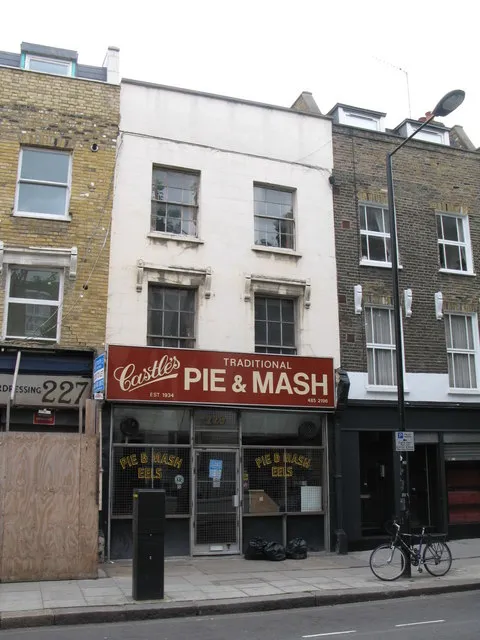
Photo: Mike Quinn, CC BY-SA 2.0, via Wikimedia Commons
Pie and mash is not a plate that travels quietly. It arrives with a puddle of pale green liquor, a dusting of white pepper, a splash of chilli vinegar and a scoop of mash that has clearly been introduced to butter. In a proper London shop, the whole thing is assembled in seconds by someone who has done it ten thousand times. At home, you have to build it in stages. That is fine. The stages are the pleasure.
This is not an attempt to clone the shop down to the last stainless-steel tile. Most of us do not have an industrial steamer, a pie warmer or any real need for stewed eels. What we do have is an oven, a frying pan, a few pie tins and a decent butcher within reach. That is enough to get the point: a crisp suet crust, a peppery beef middle, and enough green liquor to make the mash look like it is standing in a pond.
Liquor is the whole argument
The word itself is a giveaway. Pie and mash shops do not serve gravy. They serve liquor, and in the old East End shops that liquor began as the broth from stewed eels. Over time, as eel consumption fell away, the parsley sauce took over. The name stayed. The green colour stayed. The point stayed: something loose, savoury and herbal that soaks into the pastry and turns the mash into a proper mouthful rather than a side dish.
At home, the practical version is a parsley sauce made with stock rather than a full eel broth. Use chicken stock if you want a gentle background, or vegetable stock if you are feeding a mixed table. The sauce should be thinner than a white sauce for cauliflower cheese. It should pour. It should flood the plate. If it stands up in a spoon like wallpaper paste, loosen it with more stock.
For four generous pies, melt about 25g butter in a pan, stir in 25g plain flour and cook it out for a minute without letting it colour. Add roughly 400ml hot stock a ladle at a time, whisking as you go, then finish with 100ml milk and a very large handful of chopped flat-leaf parsley. Season with salt and plenty of white pepper. Keep it warm while you deal with the pastry. If it thickens too much, add stock. If it splits, whisk in a splash of hot stock and carry on. Nobody in the history of pie and mash has been sent home for a slightly imperfect liquor.
Suet pastry, not shortcut pastry
This is the other thing worth getting right. Suet pastry is not difficult, but it is different. It is soft, a little forgiving and slightly rich. It does not need to be treated like a delicate tart shell. It wants to be rolled, filled, crimped and baked.
For four individual pies, put 300g self-raising flour in a bowl with a good pinch of salt and 100g beef suet. Add cold water a little at a time, mixing with a knife and then your hands, until you have a firm but pliable dough. You will need roughly 150ml, but stop when the dough comes together. Rest it for twenty minutes under a cloth while you make the filling. If you are using vegetarian suet, check the packet and adjust the water slightly; it can be thirstier than beef suet.
Roll the pastry on a floured surface and cut discs for the bases and lids. I use metal pie tins or a deep muffin tray. Metal conducts heat better than ceramic and gives you a crisper base. There is no blind baking here. The filling goes in raw and the lid goes on top.
The filling: ask for coarse mince
Traditional pie and mash filling is not a ragu. It is beef mince, onion, seasoning and a little stock, cooked down until it is savoury and loose enough to be called a filling rather than a pate. Ask your butcher for coarse beef mince rather than the fine, pale stuff in supermarket trays. Coarse mince has texture. It tastes of beef. It also holds its shape inside the pie instead of turning into a slurry.
A good market run will sort you out. At Borough, Ridley Road or Brixton, you can buy mince from a butcher who will tell you what is in it, and pick up a fat bunch of parsley from a veg stall for less than the price of a coffee. That is the sort of sourcing this dish rewards. It was never a luxury dish. It was a filling dish for people who worked hard and wanted something hot and generous at the end of the day.
For four pies, soften one finely chopped onion in a little oil, add 500g coarse beef mince and cook until it loses its raw colour. Add 150ml beef stock, a good grind of black pepper, a pinch of salt and let it bubble down for ten minutes. You want it moist but not wet. If there is a lot of liquid, reduce it. If it looks dry, add a splash more stock. Let it cool slightly before filling the pastry.
Building and baking in a domestic oven
Heat the oven to 200C fan. Line each pie tin with a pastry disc, pressing it into the corners without stretching it. Fill with the mince mixture, but do not overfill. Brush the rim with water, press on the lid, crimp it with a fork and cut a small slit in the top. Put the pies on a baking tray and bake for 25 to 30 minutes, until the pastry is golden and crisp and the filling is bubbling at the slit.
Let them sit for five minutes before turning out. Meanwhile, boil floury potatoes for the mash. Drain them well, let the steam escape for a minute, then mash with butter and a little milk. Season with salt and white pepper. Keep it simple. The liquor is doing the heavy lifting.
Chilli vinegar and what to skip
Chilli vinegar is not optional. It cuts through the pastry, the mash and the sauce in a way that makes the whole plate make sense. Roughly chop two red chillies and put them in a small bottle or jug with 150ml malt vinegar. Let it sit while you cook. If you want it hotter, leave the seeds in. If you want it milder, scrape them out. Spoon it over at the table, not in the kitchen. People have strong views.
What to skip? Eels, unless you genuinely want to cook them. Industrial steamers, obviously. And the idea that you need a shop's worth of equipment to make this work. What you should not skip is the liquor, the suet pastry and the chilli vinegar. Those three things are the dish. The rest is a very good Saturday project for a London kitchen, even if the only green pool on the plate is the one you made yourself.