No Cellar, No Crock: A November Sauerkraut for Warm London Flats

Photo: Benreis, CC BY-SA 4.0, via Wikimedia Commons
November in London is not so much a season as a lighting condition. The market stalls are lit by three in the afternoon, the cabbages are the size of footballs, and my kitchen has two temperatures: cold lino and the bit near the oven. There is no cellar. There is a cupboard under the stairs that belongs to the neighbours, and a wardrobe that smells faintly of raincoat. So when I want sauerkraut, I make it in a jar on the counter and hope for the best. It works. Not neatly, but it works.
This is not a heritage-crock situation. You do not need a fermentation vessel, a cellar, a hygrometer or a personality that enjoys spreadsheets. You need a cabbage, salt, a clean jar, a bag and a bit of patience. The bag is important. So is the patience, though the bag is easier to find.
Start with a cabbage that feels like a bowling ball
By the second week of November 2026, the market stalls around Borough, Broadway Market and the smaller Saturday pitches in south London are full of winter cabbages. Look for one that feels heavy for its size and has tight, crisp leaves. A loose, floppy cabbage has done too much breathing and will give you a softer jar. White or green cabbage both work. Red cabbage makes a startlingly pretty kraut, but it will stain your hands and your tea towel, so choose your moment.
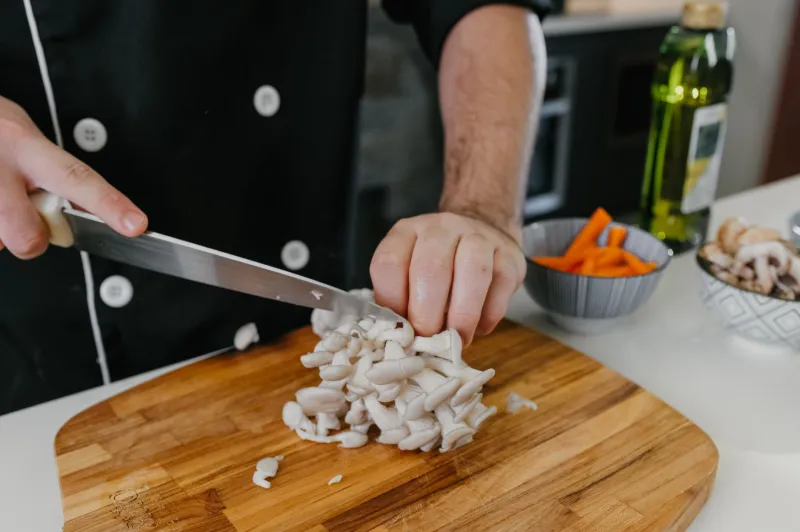
At home, strip off the outer leaves. Keep two of the best ones - you will need them later. Quarter the cabbage, cut out the hard core, then shred it as finely as you can be bothered. A food processor is fine if you have one. A sharp knife and a podcast is better. You want thin ribbons, not mush. Some people insist on 2mm shreds. I have made good kraut with 4mm shreds and a bad attitude.
The only ratio worth remembering
Weigh the shredded cabbage. For every kilogram of cabbage, use 20g of fine salt. That is 2 per cent, and it is the number that keeps the whole project on the rails. Do not use coarse rock salt, because it dissolves slowly and unevenly. Do not use iodised table salt if you can avoid it. Fine sea salt is the easy answer. If you only have 700g of cabbage after trimming, use 14g of salt. Kitchens scales are the one piece of equipment I would fight you about.
Put the cabbage in a big bowl, sprinkle over the salt and get your hands in. Squeeze, scrunch and turn it over for five to ten minutes. At first it will feel like a pointless pile of salad. Then it will start to glisten, shrink and release a surprising amount of liquid. That liquid is your brine. This is the moment the flat starts to smell like a pub cellar, which is the closest we are getting to a cellar all article.
Packing it in, and keeping it under
Sterilise a clean glass jar - a one-litre Kilner or a large washed pickle jar is ideal. You can do this with hot soapy water and a thorough rinse, or in a low oven if the jar is heatproof. Let it cool. Pack the cabbage in handful by handful, pressing down hard after each addition. Really press. You want the brine to rise up and cover the cabbage. A muddler, the end of a rolling pin or a clean fist will do.
Now take one of the reserved outer leaves, trim it to fit, and lay it over the top of the shredded cabbage. This keeps stray bits from floating. Then add your weight: a small zip-lock bag filled with a little brine or water, sealed, and tucked on top. The bag should press the cabbage under the liquid without touching the lid. If the brine does not quite cover everything, top it up with a little salted water - 1g salt to 50ml water - but usually the cabbage gives you enough.
Close the jar loosely, or clip it if you are using a Kilner with a rubber seal. Do not screw the lid down tight for the first week. This is a living thing and it makes gas. If you use a clip jar, burp it once a day by opening the clip for a second. If you use a screw jar, leave the lid just finger-tight. Put the jar somewhere out of direct sun and away from the radiator. In a warm London flat, the coolest corner of the kitchen floor or the bottom of a wardrobe is better than the worktop next to the kettle.
The first fortnight: taste, burp, do not panic
Fermentation time depends on temperature and your taste. At around 18-20C, start tasting on day five. Use a clean fork. You are looking for a sourness that makes your mouth water and a texture that still has some snap. By day ten or fourteen it will be sharper and softer. If your flat is very warm, it may get there faster. If it is cold, give it another week.
You may see bubbles, a little foam, or a white film on the surface. A thin white film is often kahm yeast and is not the end of the world - skim it off, check the cabbage is still submerged and carry on. Fuzzy mould, especially in colours, or a smell that makes you recoil rather than salivate, means the jar goes in the bin. Trust your nose. Keep everything under the brine and you are unlikely to have trouble.
Do not panic about the saltiness either. Sauerkraut is meant to be salty. It will taste less aggressive once it is cold and once you use it in food. If it is too salty for you at the end, rinse a portion before cooking. Do not rinse the whole jar unless you want to remove the point of the project.
When the jar is ready
Once you like the taste, fish out the outer leaf and the bag, screw the lid on properly and put the jar in the fridge. It will keep for weeks, though it will continue to soften and sharpen slowly. Keep it submerged in its brine. Use a clean fork each time. If the brine level drops, top it up with a little salted water.
This is where the sauerkraut starts paying rent. On a dark Tuesday when cooking feels like a administrative task, a forkful of kraut wakes up almost anything. Fold it through mashed potato with a lot of butter and some sharp cheese. Pile it onto toast with leftover roast chicken or a fried egg. Stir it into a lentil and sausage stew at the last minute, so it stays crunchy. Add it to a baked potato with cream cheese and black pepper. Use it as a sharp little side for pork chops, or a cold-weather sandwich with salted beef and mustard.
Supper from a forkful
My favourite November supper is a hot pan of potatoes, onions and whatever sausage is in the fridge, with a big spoonful of kraut stirred in right at the end. The sourness cuts through the fat and makes the whole thing taste like you planned it. Another good one: fry chopped kraut with cooked rice, an egg and a splash of soy sauce until the edges go crisp. It is not authentic anything, but it is fast and it works.
The jar will not last forever, and neither will the cabbage season. That is fine. This is a small-batch project for a small kitchen: one cabbage, one jar, one bag, a fortnight of mild curiosity. No cellar required.