The Larder With No Till: Inside London's Quiet Food Swap Networks
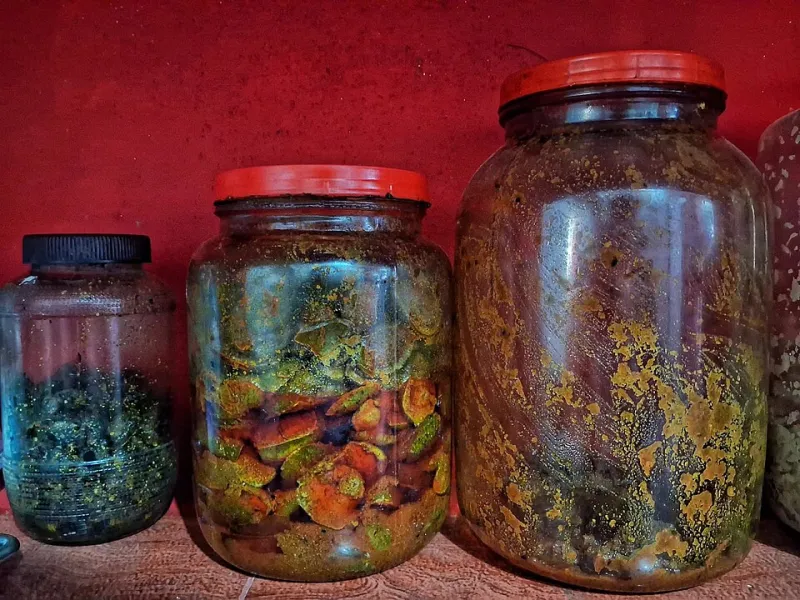
Photo: পাপৰি বৰা, CC BY-SA 4.0, via Wikimedia Commons
On a residential street in Walthamstow there's a small shelf inside a porch, half a metre square, holding a jar of marmalade, three courgettes, a paper bag of bay leaves and a hand-written note that says “help yourself, more coming Sunday”. It isn't a shop. It isn't a food bank. It's the smallest unit of a phenomenon that has quietly spread across the city over the last few years: the informal food swap.
These networks rarely advertise. They live in WhatsApp groups with names like “Peckham Preserves” or “Crouch End Glut Club”, on allotment noticeboards, in church hall foyers and on the tables at the back of community markets. And they are, in their own low-key way, one of the more interesting things happening in London food right now.
Why home cooks are trading instead of buying
The logic is simple. A runner bean plant in August will produce more than any household can eat. A batch of chutney makes eight jars whether you needed eight or not. Someone else has a lemon tree on a sunny balcony, or an apple tree in a back garden that they never get round to using. Under a cash system, most of that ends up in the bin. Under a swap system, it becomes somebody else's dinner.
The appeal isn't only thrift, although thrift is real in a city where a decent jar of preserve costs four or five pounds. People I spoke to described something closer to neighbourliness: a reason to knock on a door, a way to meet the people three houses down, a system for getting rid of 40 greengages without having to make 40 greengages' worth of jam.
How the swaps actually run
There is no single model. The most common is the group chat — typically six to thirty households, organised by street or by school or by allotment site. Someone posts a photo of a bowl of tomatoes with a note that they're free, and someone else replies offering a jar of something in return. Collection is usually from a doorstep, often with no actual meeting involved.
Then there are the physical shelves and tables, which tend to be more social. A porch shelf, a church hall table on a Saturday morning, an allotment shed with an honesty-box-style arrangement that has evolved into pure barter. These tend to run on trust and on the understanding that if you take two things, you bring something back eventually.
And there are organised swap events, often tacked onto farmers' markets or seed swaps. You bring a jar, you leave with a different jar, and there's usually a table of things nobody claimed at the end that gets redistributed to whoever's still standing.
The etiquette nobody writes down
Ask anyone who runs one of these groups and they'll tell you the same thing: the unwritten rules do more work than the written ones.
- No money. The moment cash appears, it becomes a business, and businesses have regulations, insurance and tax implications that nobody wants on a Tuesday evening.
- Don't use it as a tip. A swap group is not the place to offload the mouldy end of your fridge. If you wouldn't eat it, don't offer it.
- Label everything. Ingredients, date made, and allergens. A jar of chutney with mustard seed in it is a problem for someone with a mustard allergy, and nobody will remember in February.
- Return the container. Or at least offer to. Kilner jars are expensive and they migrate.
- Match the effort. If someone hands you a slow-cooked membrillo, don't offer a handful of slightly limp parsley.
- Say thank you, and say it publicly. A photo of what you made with it in the group chat is the currency these networks actually run on.
The safety conversation worth having
Nobody wants to be the person who introduces a risk assessment to a WhatsApp group, but a small amount of common sense goes a long way — and it's fairer to everyone if it's stated once, early, rather than raised awkwardly after the fact.
The things that travel well through a swap: high-sugar preserves (jam, marmalade, chutney), vinegars and pickles with a decent acid content, dried herbs, fresh produce straight from a plot, bread, cakes and biscuits meant to be eaten within a few days, and fermented things made by someone who clearly knows what they're doing.
The things to be careful with: anything preserved in oil — garlic or chillies in oil, for instance — carries a genuine botulism risk if it hasn't been acidified properly; low-acid vegetable preserves made in a water bath; unpasteurised dairy; and foraged mushrooms, which really shouldn't be swapped unless the forager is experienced and specific about what they are. Fresh produce should be clean and honestly described. If something has been made in a kitchen with a dog and a cat and a nut habit, say so.
The golden rule is the same one that applies to your own kitchen: if in doubt, don't.
What it says about a neighbourhood
The character of a swap network tends to reflect the street it's on. In Peckham, groups trade scotch bonnets, plantain and bags of herbs; on the Walthamstow allotments it's runner beans, courgettes and the eternal surplus of rhubarb. Crouch End leans preserves and sourdough. Around Brixton and Herne Hill, fruit trees dominate in late summer — greengages, pears, the occasional quince.
What they have in common is a low tolerance for fuss. The best-organised groups I came across had fewer rules than the badly run ones, because the people in them already understood the point.
Starting a small swap of your own
- Start with people you can walk to. Six to eight households on the same few streets works better than sixty spread across a borough.
- Pick the simplest platform. One group chat, one purpose: glut announcements and swap offers. Keep the general chat elsewhere.
- Write three rules and pin them. No money. Label jars with contents and date. Nothing you wouldn't eat yourself.
- Do a first meet in person. A Saturday morning on a doorstep with a flask of tea does more for a group than a year of messages.
- Find a shelf. A dry, shaded spot by a door, out of the sun and away from foxes, is all you need.
- Keep a note of what works. Which things get taken, which sit there for a fortnight, who always brings the good stuff.
The scale is deliberately unambitious, and that's the strength of it. A swap network doesn't need to change the food system. It just needs to stop a bag of beans going in the bin and put a jar of something good in your cupboard instead.