Ask for the Frame: A Week of Suppers on Three Quid's Worth of Bones
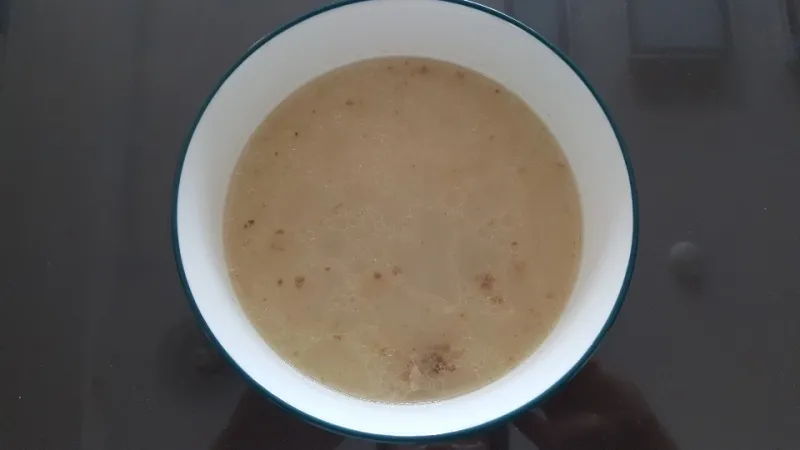
Photo: 해능, CC BY-SA 2.0 kr, via Wikimedia Commons
The question that quietly reorganised my cooking week cost nothing to ask. I was buying a chicken from a Saturday market stall in east London, and instead of walking off with the bird I said: what happens to the frames?
The trader looked at me like I'd asked for his car keys, then pointed at a crate behind him. He charged me a pound. There were four in there.
That crate is the starting point of this piece. Not because bones are a secret — every cook knows stock comes from bones — but because the asking is the part people don't do. It feels like a favour, or a cheeky request, or something you need to be a certain kind of person to get away with. It isn't. It's a normal transaction at a market that runs on small margins and thin margins on waste disposal.
One sentence at the counter
Go when the queue is short — mid-morning, not the 9am scrum. Buy something first, even something small; you're a customer, not a scavenger. Bring your own bag or tub, because nobody wants to hand you a dripping frame in a plastic carrier that will split on the bus.
Then be specific. "Have you got any chicken frames or wing tips?" works far better than "have you got any scraps?" The first is a product. The second sounds like a complaint waiting to happen.
What London traders will actually part with
Chicken frames and wing tips are the easiest ask and the best value. They're the backbone of the bird, usually trimmed off before the breasts go on display, and two or three make a litre and a half of properly gelatinous stock.
Beef marrow bones, knuckle and shin bones turn up at most proper butchers, often for £1–£2 a kilo. Lamb neck bones are cheap and make a stock that's almost a stew by itself. Pork trotters give body and a silky texture. Ham hocks and bacon bones are excellent in beans and greens, but they're salty — use them as the seasoning, not as a neutral base.
Fish frames are worth asking about at a fishmonger, but only if you're making fish stock the same day. They don't wait around.
Vegetable trimmings are a different conversation. A market veg stall generates sacks of the stuff — outer leaves, ends, slightly bruised roots — and most traders are happy to fill a bag if you ask before the close-down sweep. Some shops now bag it and sell it as a "stock bag" for a couple of quid, which is fair enough and saves you the ask.
What to say no to
This is the part that matters more than the enthusiasm. Trimmings are not automatically good.
Anything that smells sour, feels slimy, or has been sitting in the sun is out. Bones from a counter that's been unrefrigerated for hours are out — a stockpot is not a steriliser. Skip anything cured or heavily smoked if you want a neutral base, and go easy on gammon rind unless you're making something that wants to taste of bacon.
On the vegetable side, be picky. A bag that's mostly potato peel and cabbage leaves makes a cloudy, faintly bitter liquid that tastes of boiled dinner. Brassica trimmings, in particular, go sulphurous over a long simmer. Use those in a quick thirty-minute vegetable stock and nothing more. Onion skins give a decent golden colour but turn bitter if you boil them hard — a handful is plenty.
And avoid anything sold as pet food. The handling and labelling rules are different, and you're cooking for people.
The pot, without a recipe
Cold water, bones in, heat on low. Bring it up slowly and skim the grey foam that rises in the first twenty minutes. Never let it boil hard; a rolling boil emulsifies the fat and you end up with cloudy stock that tastes greasy.
Chicken frames need an hour and a half to two hours. Beef and lamb want three to four, and they're better if you roast them first at 200°C for twenty minutes to get some colour on them. Add your aromatics — onion, carrot, celery, bay, peppercorns — in the last hour, so they give flavour without dissolving into mush. Salt at the very end, once you know how far you've reduced it.
Strain through a sieve, press the solids gently, and don't chase the last cloudy pint. Then reduce what you've got by half. Concentrated stock takes up less space, which brings us to the real London problem.
Freezing when your freezer is one drawer
Cool the pot fast — sit it in a sink of cold water, change the water once, get it under 5°C within ninety minutes. Then pour into freezer bags, squeeze flat, and freeze them stacked like books. Flat bags defrost in twenty minutes and slot into gaps a tub never will.
Ice cube trays are good for the small amounts you need to deglaze a pan. Anything you'll use within four days can just live in a jar in the fridge. Label with the animal and the date, because frozen stock all looks the same by February. Three months is a sensible limit.
What three quid buys you
Monday: chicken broth with noodles, ginger and whatever greens are wilting. Tuesday: risotto made with beef stock, stirred slowly, no wine, plenty of butter. Wednesday: a lentil soup built on the same base with the last of the carrots. Thursday: white beans simmered with a ham hock until they go creamy, eaten with toast. Friday: the rest of the risotto, fried into cakes.
That's five suppers off a carrier bag and an afternoon. Not because bones are fashionable, but because they're the part of the animal that's already done its work and is now being thrown away by weight.
The quiet economy of trimmings
Here's what I keep coming back to. Traders pay for waste removal. Every sack of frames and peel that goes out the back costs them something, so a customer who turns up with a bag and a smile is doing a small, unglamorous service. In 2026, with pitches costing what they cost, that arithmetic is not romantic — it's just sensible.
Which is why the ask works best as a habit rather than a heist. Learn one trader's name. Buy the chicken, then the frames. Come back the following week. After a month, they'll keep a bag aside for you without being asked, and you'll have quietly built the cheapest, most useful relationship in your local food economy.
Start with a pound and a question. The pot does the rest.