A Kilo of Tides: Christmas Eve Mussels for a One-Hob London Flat
Photo: Wilson, Charles Branch, 1861-1941. [from old catalog], No restrictions, via Wikimedia Commons
The case for a bag, not a bird
Christmas Eve in a London flat can go one of two ways. Either you spend it prepping for the main event, or you decide the main event can wait until Christmas Day and eat something quick, salty and quietly celebratory instead. Mussels belong firmly in the second camp. They cook in minutes, they don't ask for an oven, and a kilo from a proper fishmonger costs about the same as a couple of disappointing sandwiches at a station.
The other advantage is space. If your kitchen is the sort where the oven doubles as a cupboard and the hob has exactly one reliable ring, Christmas Eve is not the moment for a rib of beef. A wide pan, a lid and a bag of shellfish will do. The big day's oven stays free, the washing-up is modest, and nobody has to pretend a starter is fun.
This is not a fussy recipe. It is a route through a market bag: buy well on 24 December, purge the mussels, cook them in cider and cream, char some bread on the hob, and turn whatever is left into soup the next day. If one person at the table doesn't do shellfish, the same base will poach mushrooms very happily. Mixed appetites are not a problem; they are just a second small pan.
What £10 should get you
A kilo of live mussels is a generous supper for two with bread, or a sensible one for three if you add potatoes. In London, £10 should cover the mussels from a decent fishmonger, especially if you are buying a simple rope-grown bag rather than something flown in from far away. The rest of the pot is larder work: a shallot, a garlic clove, thyme, a splash of cider, a little double cream, butter and a baguette.
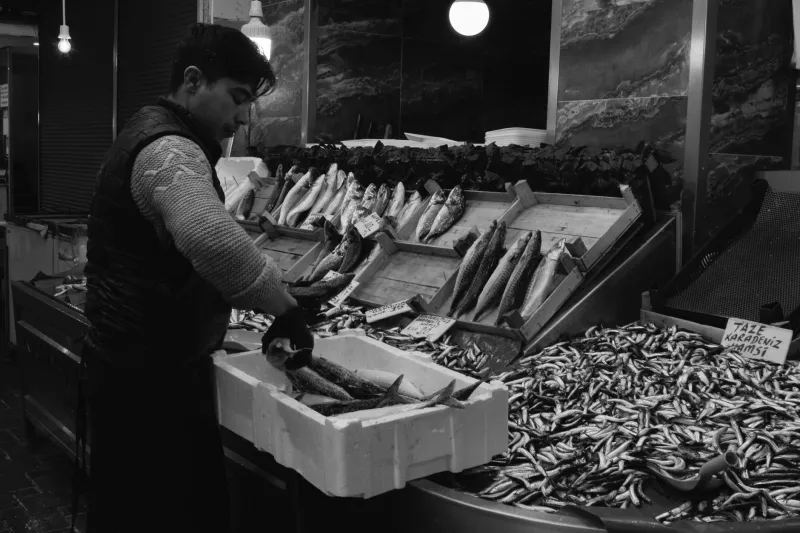
Buy on Christmas Eve if you can, and buy from someone who knows what they are selling. A market fishmonger or a proper high-street shop will usually let you look into the bag before it is wrapped. You want shells that are mostly closed, a clean sea smell, no cracked ones and no loose liquid sloshing about. If the shop is busy — and on 24 December it will be — ask for a bag with a little ice and get them home before you do anything else.
Christmas Eve queues in London are their own genre. Borough will be heaving, high streets will be frantic, and the good fishmongers will sell out of the nicest things by early afternoon. If you can pre-order, do. If not, go earlier than you think you need to and avoid the last-hour scramble.
Purging, picking and the one rule
Mussels need a little attention, but not much. Tip them into a bowl of cold salted water — about 30g of salt per litre — and leave them for 20 to 30 minutes. This encourages them to spit out grit. Don't leave them there all afternoon; they are alive, and they don't want to sit in a brine bath while you wrap presents.
Lift them out, scrub the shells under cold running water and pull away any beards. Tap any open shells on the side of the sink. If they close, they are fine. If they stay open, bin them. Cracked shells go too. The one rule is simple: if it doesn't close, it doesn't go in the pot.
After cooking, the rule reverses. Any mussel that stays shut after steaming should be discarded. The ones that open are the ones you want. This sounds severe, but it is the whole safety lesson, and it takes less time than reading the back of a supermarket ready-meal box.
The pot: cider, cream and a little restraint
Use your widest pan with a lid. Melt a knob of butter, soften a finely chopped shallot with a pinch of salt, then add a grated garlic clove and a few sprigs of thyme. Pour in about 150ml of dry cider and let it bubble down for a minute or two. Add 100ml of double cream and bring it to a gentle simmer. You are not making a thick sauce; you are making a broth with a bit of body.
Tip in the drained mussels, clamp on the lid and give the pan a shake. They will open in three to four minutes. Keep the heat medium-high and check after three. As soon as most shells are wide open, take the pan off the heat. Stir through a handful of chopped parsley and taste the broth. It may need black pepper, but it rarely needs more salt.
For anyone who doesn't eat shellfish, spoon some of the cider-cream base into a small pan before the mussels go in. Add sliced mushrooms — chestnut or oyster — and simmer until tender. Serve them with the same charred bread and a little parsley. It is not a consolation prize; it is a very good supper in its own right.
Charred bread without the oven
A baguette cut into thick slices can be charred in a dry frying pan on the hob. Get the pan hot, lay the slices in and press them down lightly. Turn them when they have dark spots and a bit of resistance. Rub the hot surfaces with a cut garlic clove, drizzle with olive oil and sprinkle with flaky salt. If your hob is tiny, do this in batches while the mussels cook, or before you start the pot. The bread should be more chewy than crisp — good for dipping and mopping.
A flat-friendly timeline
At 5.30pm, rinse the mussels and set them in the salted water. At 5.45pm, make the base and char the bread. At 6pm, cook the mussels. By 6.10pm, you are eating. Cool any leftovers quickly, get them into the fridge within an hour and reheat only once, until piping hot.
This is a one-pan supper with a bowl for the shells and a board for the bread. Open a window if the steam gets lively. The oven stays off, the extractor fan does its best, and the flat smells of cider and the sea rather than roasting turkey.
The next-day soup
Strain any leftover broth into a small pan. Add a diced potato and a sliced leek, simmer until tender, then taste. If you have leftover mussels, pick out the meat and add it at the very end, just long enough to heat through. Don't boil it. A spoonful of cream and a little parsley turns it into a proper Boxing Day lunch, and it costs almost nothing.
If there are no mussels left but there is broth, the soup still works. Add a handful of frozen peas or a tin of white beans. Eat it with the last of the bread, sitting down, while the Christmas Day oven does whatever it needs to do.