The Bag by the Door: Cooking London's Chestnut Stalls Before the Season Slips
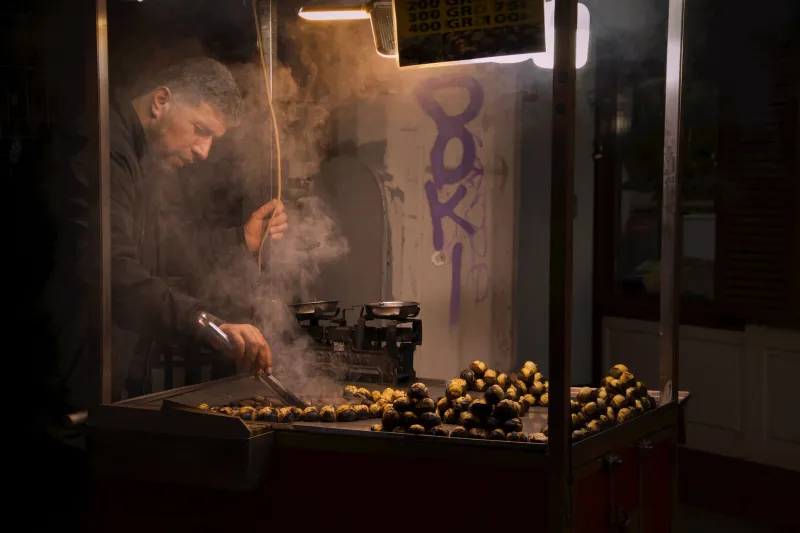
Every November, London's street stalls start selling bags of glossy brown chestnuts, and most of them end up in a bowl by the front door. They look wonderful next to a candle. They also happen to be one of the best cold-weather ingredients in the market, sweet and starchy and capable of far more than decoration. The trick is to buy a bag with a plan, not just an aesthetic. This is a small kitchen project for a grey weekend: one bag, a hot oven, and three ways to use what you peel.
First, sort your nuts from your conkers
This is the important bit. Sweet chestnuts are food. Horse chestnuts, the shiny ones children collect for conkers, are not. They are bitter and can make you ill, and no amount of roasting makes them a good idea. If you are buying from a market stall, you are almost certainly getting food-grade sweet chestnuts, but it is still worth asking. If you are foraging, do not guess. Buy from a stall instead and leave the conkers to the playground.
Buying: ask the stallholder a direct question
Look for nuts that feel heavy for their size, with a glossy shell and no pinprick holes. A dull or light nut is often dried out; a hole means a grub got there first. Shake one: if it rattles, the flesh has shrunk and it will be fussy to peel. Ask the stallholder whether these are eating chestnuts, not just roasting stock for display. At Borough, Broadway Market, Columbia Road and the smaller stalls around Ridley Road and Leather Lane, you will usually find food-grade sweet chestnuts in paper bags. Buy a little more than you need: peeling always has casualties, and cooked chestnuts freeze well.
The score, the soak and the patience
Score each nut before it goes anywhere near heat. Use a small sharp knife and cut a one-centimetre slash across the flat side, through the shell only. This is not optional. An unscored chestnut can burst, and a hot chestnut exploding in an oven is a surprisingly dramatic way to spend a Saturday.
Soak the scored nuts in cold water for 20 minutes if you like. It steams the flesh and makes peeling kinder. Drain and pat dry, then spread them on a tray, cut side up, and roast at 200C fan or 220C conventional for 20 to 25 minutes, until the shells curl back and the nuts feel tender when pierced. Tip them into a clean tea towel, wrap, and leave for five minutes. Peel while warm: press on the shell until it cracks, then pull. It is fiddly. Put on a podcast. Do not try to peel cold chestnuts unless you enjoy regret.
Soup: the velvet route
Once peeled, chestnuts make a deeply savoury soup with almost no effort. Soften a chopped onion and a stick of celery in butter, add a clove of garlic, then tip in 300g of cooked peeled chestnuts and enough chicken or vegetable stock to cover. Add a few thyme sprigs and simmer for 15 minutes. Blend until smooth, loosen with a splash of milk or cream, and season properly. It wants salt and a little acid, so taste before you serve. Crisp pancetta or fried sage on top is not essential, but it is the difference between a nice soup and a bowl you remember. This makes enough for four and freezes well.
Stuffing: the sausage-meat upgrade
Chestnuts are excellent in stuffing because they bring sweetness and a crumbly texture without competing with the meat. Fry a chopped onion with sage and allow it to cool. Mix with 400g sausage meat, 150g cooked chopped chestnuts, 75g fresh breadcrumbs, a grated apple and plenty of black pepper. Press into a buttered dish and bake at 180C fan or 200C conventional for 35 to 40 minutes, until browned and cooked through. It works beside a Sunday roast chicken as well as it does at Christmas, and it is worth a test run in November while the chestnuts are still on the stalls.
A sweet finish, ten minutes after the peeling
For a sweet finish, make a chestnut cream. Blend 250g cooked peeled chestnuts with 100ml milk, 40g caster sugar and a splash of vanilla until smooth. Fold through 150ml lightly whipped double cream, spoon into glasses, and chill. Top with grated dark chocolate and a pinch of flaky salt. It is essentially a shortcut Mont Blanc, and it takes ten minutes once the chestnuts are peeled. If you have a little cocoa, dust it over the top and call it a November pudding.
The leftover bag
Cooked chestnuts keep for a few days in the fridge and freeze well in a bag, ready for soup or stuffing. Raw ones should stay cool and dry and be used within a few days; a paper bag is better than a plastic one, which traps moisture. Do not leave them in the bowl by the door for a month and then wonder why they are dusty and hard. The bowl is for looking. The kitchen is for cooking. This November, let the bag earn its place.