Brenda the Starter and the 78% Hydration Club: Notes From Our 2026 Sourdough Census
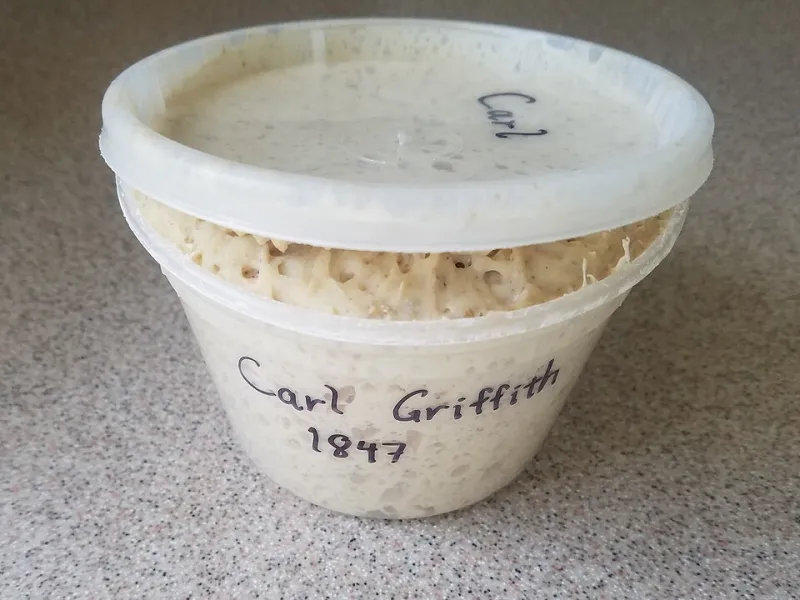
Photo: Anon423, CC BY-SA 4.0, via Wikimedia Commons
There is a particular look people get when you ask them about their sourdough. Slightly defensive. A bit proud. Usually holding a jar. Over the past few weeks we have had more than a thousand of those conversations, by form and by email, and the picture that emerged is far more interesting than the one you would get from scrolling baking videos.
This is not a scientific study. It is a census of enthusiasm. And it turns out British home baking in 2026 is quieter, cheaper and considerably less showy than the internet would have you believe.
How we counted
We ran a short, unscientific poll through October 2026 — fourteen questions, no flour brand sponsorship, no prize draw to skew the numbers. 1,412 people finished it. We also read around 200 longer emails, many of which contained photographs of crumb structure nobody asked for and one photograph of a starter in a Kilner jar wearing a tiny knitted hat.
About a third of respondents had been baking since the 2020 lockdown rush. Another third started in the last eighteen months. The rest are lifers, some of whom have been keeping the same starter since before anyone thought to film it.
Treat the percentages as a mood board, not a census of the realm.
The hydration wars have gone quiet
The headline finding: the obsession with absurdly wet dough appears to be over. The most common hydration band reported was 70–78 per cent, chosen by 46 per cent of respondents. Another 24 per cent sit at 65–70 per cent. Only 9 per cent bake above 85 per cent — and of those, four separate people described their results as 'a bit of a disaster, honestly'.
Roughly 15 per cent said they do not measure water at all and go by feel. This group reported the highest satisfaction scores, which either proves something profound about intuition or something obvious about people who don't fill in a form honestly.
The practical takeaway is not glamorous. If your loaf is spreading sideways rather than standing up, drop your hydration by five per cent before you buy any new equipment. A 72 per cent dough is easier to shape, easier to read, and produces a more open crumb than a sloppy one you've handled badly.
Flour: the quiet retreat to British
The most interesting shift of 2026 is where the flour comes from. Forty-one per cent now buy British stoneground flour at least some of the time, up noticeably on the answers we got in our 2023 survey, and 58 per cent described their standard mix as a blend of white bread flour and around 10–20 per cent wholemeal.
Rye has settled into its proper role: a few spoonfuls in the starter, a dusting on the banneton, rarely the main event. Nobody in the entire sample said they bake 100 per cent rye regularly, which is either a relief or a shame depending on your temperament.
The other change is thrift. People are buying 16kg sacks in groups, splitting them with neighbours, and storing them in the freezer. One reader in Leeds runs a monthly flour order for nine households on her street. That feels like the truest version of this whole hobby.
Your starters have names, and the names are unhinged
Sixty-two per cent of respondents have named their starter. The names arrive in clusters. There is a large contingent of Brendas, Dorises and Margarets — starters named, presumably, after grandmothers. There is a smaller, rowdier group with names like Clint Yeastwood, Dame Judi Dough and Dougal. Four people admitted naming a starter after an ex-partner and keeping it alive out of what can only be described as spite.
Here is the odd bit: people who named their starter were considerably more likely to still have a living starter twelve months later than those who didn't. We are not going to pretend that is causation. But there is something to the idea that a thing you talk about, photograph and occasionally knit a hat for is a thing you remember to feed.
Four myths that will not die
Some beliefs are apparently passed down like heirloom crockery.
'Metal kills a starter.' It does not. A stainless steel spoon or bowl is fine. Reactive metals are the ones to avoid, and even then mostly for long contact.
'You must discard.' You must remove some, yes, or the jar becomes a physics problem. But that portion does not have to go in the bin. It becomes pancakes, crackers, flatbread or a batter for fried fish.
'London tap water will murder it.' London water is hard and chlorinated, and a very sensitive starter may sulk for a day. Leaving water to stand, or using a filter jug, sorts most of it. Starters die of neglect and heat, not of the Thames.
'Sourdough is gluten-free.' It is not. It is lower in some FODMAPs and it is delicious. It is not safe for coeliac disease. Please stop telling your aunt otherwise.
One bonus myth, submitted with real anger by three readers: that you need a banneton. A colander, a clean tea towel and a generous dusting of flour have produced some of the best loaves in this survey.
What actually fixes a flat loaf
The emails converged on a handful of fixes, in roughly this order of impact.
-
Your starter isn't ready. It should double within four to six hours of feeding, reliably, at room temperature. If it takes all day, the dough will not rise properly no matter how long you wait.
-
Your kitchen is colder than you think. In November, a London kitchen at 17°C will double your bulk fermentation time compared with a summer kitchen. Put the bowl somewhere warmer and use a straight-sided container so you can see the rise.
-
Over-proofing, not under-proofing, is the usual culprit for a collapsed top. Under-proofed dough springs back hard when you poke it and feels tight. Over-proofed dough is jiggly, domed and slightly sour-smelling. The poke test is imperfect but it is better than the clock.
-
Shape with more tension. A loosely shaped boule will pancake in the oven. Work the surface until it feels like it is fighting back, gently.
-
Steam matters more than you think. A lidded pot is still the cheapest way to fake a professional oven.
The money question
Nobody wants to hear it, but sourdough is only cheap if you bake often. At current UK flour prices, a medium loaf costs somewhere between 60p and £1 in ingredients, plus oven electricity. If you bake twice a week for a year, the cost of a banneton, a decent jar and a sack of flour is repaid by about March. If you bake once a month, you are running an expensive hobby with excellent toast.
Which brings us to the most heartening answer of the whole survey. Asked what they would change about their baking, the single most common response was: nothing much, I just want to do it more often.
Same. Feed Brenda, everyone.